 English
 Français
 Español
 Italiano
 Deutsch

No products available yet
Stay tuned! More products will be shown here as they are added.



Diagnosis always precedes treatment. A correct diagnosis is the basis for an effective treatment and therefore it is of particular importance, which demands technical know-how, but also places high demands on precise and reliable instruments.
In the "General medicine" category, we offer you medical devices that are used for preliminary examinations. These include stethoscopes, blood pressure monitors, diagnostic lamps, otoscopes and many other diagnostic instruments. The category also includes circumference and height gauges as well as reflex hammers and tuning forks.
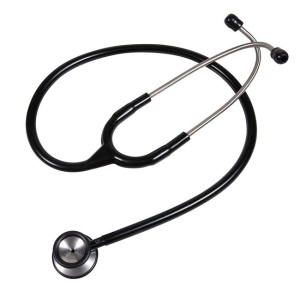
Discover our selection of high-quality stethoscopes for professional use. Whether for doctors, nursing staff, medical students or veterinarians - you will find the right model for your needs here.
We offer:
Our stethoscopes impress with their excellent acoustics, comfortable wearing comfort and high quality workmanship. Choose from leading brands and find the ideal model for your requirements!
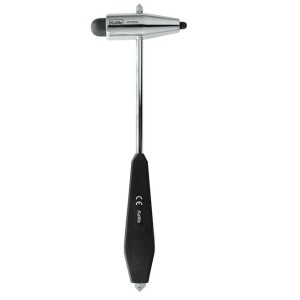
The reflex hammer is a simple test instrument for testing muscle and tendon reflexes as well as skin reflexes. Additional instruments such as brushes and needles can be integrated into the hammer handle or hammer head in order to carry out sensitivity tests in addition to reflex tests.
Reflex hammers come in a variety of shapes, sizes, colors, and materials. In addition to the classic stainless steel model, there are hammers made of plastic, carbon fiber or titanium. In pediatrics, toy-like models are often used to take the martial look out of reflex hammers for children. Others differ in their typical shape.
Most reflex hammers have two differently sized rubber inserts on the head. Thicker rubber bars cause large tendon reflexes in the extensor muscles (patellar reflex, ankle jerk reflex, and triceps tendon reflex). In addition, selective pressure is suitable for triggering painful reflexes (e.g. radial periosteal reflex). The smaller rubber rod is used for the flexor tendons (e.g. biceps tendon reflex). Skin reflexes are caused by sharp metal tips on the hammer handle.
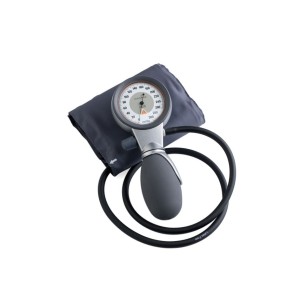
Our clinical sphygmomanometers are designed for medical professionals who demand accuracy, reliability, and durability in daily practice. Whether in a hospital, clinic, or medical office, these professional blood pressure monitors deliver precise results you can trust for patient care.
Ideal for:
Provide your patients with the highest standard of cardiovascular care – with a clinical sphygmomanometer that combines precision, comfort, and professional-grade reliability.
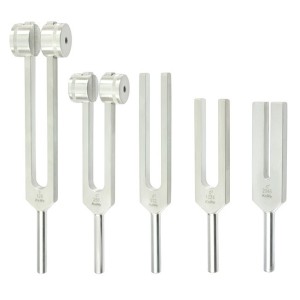
Medicinal tuning forks will forever be associated with names such as Weber and Rinne or Rydel Seiffer. Every carefully-done, complete physical examination of a patient involves the use of a tuning fork.
The graduated tuning fork developed by Rydel Seiffer c 128 Hz/C 64 Hz is a standard in the field of neurology and is also probably the most well-known neurological tuning fork. This calibrated tuning fork has removable dampers with a 1/8 scale graduation and is used to identify a loss of the sense of vibrations, and is used to diagnose polyneuritis which can occur e.g. along with diabetes mellitus. With the screwed-on dampers, the fork vibrates at 64 Hz. Reference marks for exact calibration of the original KaWe tuning fork can be found on the back side of the fork tines. It is in this configuration that the tuning fork is used in vibration examinations. The screwed-on plastic foot allows for a gentle transfer of the vibrations from the tuning fork to the patient. Without the dampers, the instrument vibrates at a frequency of 128 Hz and is used for simple hearing and bone conductivity tests. This tuning fork method for testing sensibility, which was first used in 1903, is still considered to be the most dependable and safe even today.
The Weber experiment serves to identify a laterality of the sense of hearing with the use of a tuning fork. Physiologist Ernst Heinrich Weber (1795–1878) of Leipzig first recorded this in experiment in 1825. Hildesheimer psychologist Heinrich Rinne (1819–1868) amended the test in 1855. Whereas the Weber test serves to compare the sound perception of each ear by means of bone transmition, the Rinne test compares air and bone transmition. Both tests together form a standard test for the examination of hearing damage as well as of the eighth cranial nerve.
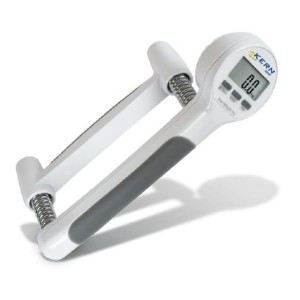
Hand grip dynamometer, e. g. for rehabilitation treatment after accidents
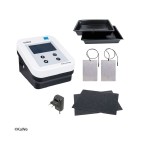
Sweating is healthy. It cools the body down and regulates its temperature. However, if the sweating becomes excessive, it can become troublesome and cause discomfort. Do you feel helpless and want to do something about it? The iontophoresis device helps you with the implementation of hyperhidrosis therapy. Hand and foot baths are carried out, through which weak direct or pulsed current flows. The strength of the current can be individually adjusted - depending on the desire and sensitivity. The armpits, face and neck can also be treated using special sponge applicators. Be carefree: The procedure is absolutely harmless and almost free of pain and side effects. The iontophoresis devices are equipped with protective functions against electric shocks, the operation is simple and no auxiliary person is necessary.
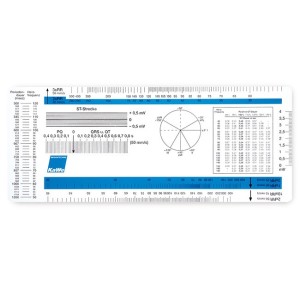
Various articles
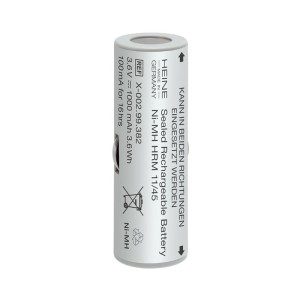
Accessories General Medicine
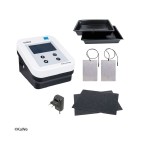
KaWe SwiSto3 continuous and pulsed current therapy with one machine for the treatment of hand, foot and underarm perspiration. KaWe’s 3rd generation, the latest technology and manufacturing experience for more than 20 years.
Stay tuned! More products will be shown here as they are added.